.png)
Categories
ADU, Buying Dirt, Buying Land, Buying Tips & Resources, Buyer market, Homebuyer Tips, Home Prices, Housing crisis, Housing market, Housing Trends, Land Development, Real Estate, Real Estate Fees, Real Estate Market Trends, Real Estate Tips, Washington State Real Estate, Washington State, Wealth Building through Real EstatePublished May 11, 2026
ADU Marysville Washington: The ADU Marysville Washington Checklist That Can Make or Break Your Deal

Written by Anton Stetner
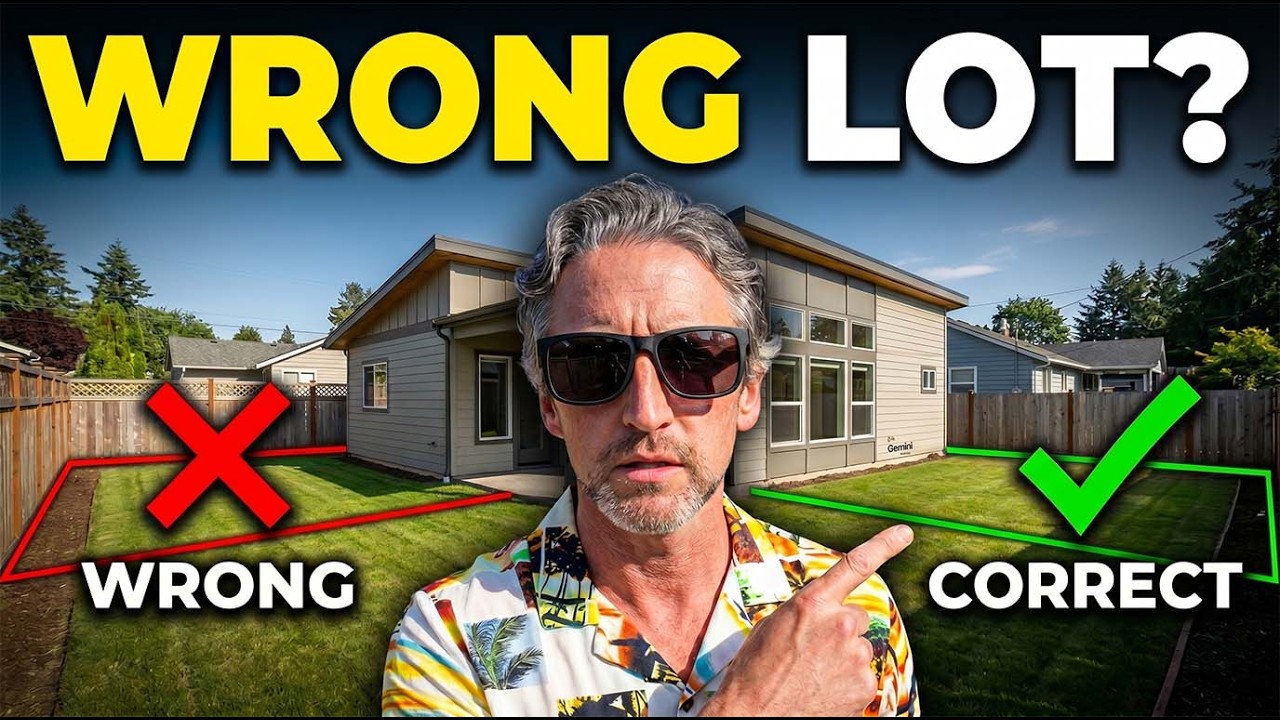
How to Pick the Right Lot for an ADU in Washington State
A lot can work perfectly on paper and still be a disaster for building an ADU. What actually matters: alley access (not required, but a huge plus), where the main house sits on the lot (front or side, not dead center), and sewer depth (gravity does the work, so a deep connection means a brutal contractor bid). Washington's House Bill 1336 forced cities to allow more ADUs and DADUs statewide, and everyone from investors to homeowners is racing to build. But not every lot qualifies, and people are burning money on plans, permits, and engineering before finding that out the hard way.In fact, some lots are absolute disasters for ADU development, and people don’t realize it until they’ve already burned money on plans, permits, engineering, or worse, bought the wrong property entirely.
This is where people get wrecked.
Because adding a DADU is not just “throwing a tiny house in the backyard.” Cities still care about access, utilities, setbacks, easements, drainage, impervious surface calculations, and neighborhood restrictions.
Translation? The lot matters more than the dream.
The best ADU lots almost always share one thing in common: access.
If the property has alley access behind it, life gets dramatically easier. Suddenly you can create a cleaner entrance to the detached unit without forcing people down awkward side yards or squeezing driveways into impossible spaces.
You don’t absolutely need an alley, but if you have one, congratulations. The city planner reviewing your project probably hates you slightly less already.
The second thing that matters is where the main house sits on the property.
This is where people accidentally buy “good-looking” lots that are actually terrible development lots.
Ideally, the existing house sits close to the front of the property or pushed off to one side. Why? Because you need room to get to the backyard. If the house sits smack in the middle of the lot like a giant obstacle, your ADU dreams start dying fast.
And no, cities do not magically bend the rules because you “really want it to fit.”
Utilities are the next landmine.
Everybody gets excited about the building itself, but nobody thinks about sewer depth until they get a horrifying contractor bid. Sewer runs downhill. Gravity is undefeated. If your sewer connection sits twenty feet underground, that gets expensive fast. Twelve feet? Better.
Then there’s electrical.
A lot of older neighborhoods have overhead power lines that suddenly become your problem when you try fitting another structure onto the property. Sometimes you’ll need to relocate electrical infrastructure entirely just to make the layout work. Bigger power lines can also create easements that limit where you can build.
Which brings us to one of the most ignored parts of land development:
Read the paperwork.
Seriously.
Check the CC&Rs. Check recorded easements. Check the original plat maps. Half the battle in development is discovering what invisible rules already exist before you spend money.
Some neighborhoods outright prohibit ADUs through restrictive covenants. Others have utility easements slicing through the exact spot where you wanted to build.
Nothing kills excitement faster than realizing your perfect backyard legally belongs to the power company.
Lot size also matters more than people think.
In general, smaller than 5,000 square feet starts getting difficult. Around 5,000 square feet becomes workable. Around 6,000 square feet? Now you’re cooking.
Especially if the house placement is good.
Bigger lots create flexibility. Flexibility creates options. Options create profits.
And right now, Washington is still in this weird gold rush phase where many homeowners and investors haven’t fully caught on yet. That window probably does not stay open forever.
Because eventually the market adjusts.
Once everybody understands ADU value, lot prices rise to compensate. Deals get harder to find. Cities tighten interpretations. Competition increases. The easy wins disappear.
That’s usually how every real estate opportunity cycle works.
There’s also another hard truth people need to understand: building an ADU takes longer than they expect.
Everyone thinks their project will move quickly.
Then permitting happens.
Then engineering revisions happen.
Then utility coordination happens.
Then city comments happen.
Nine months is fast. A year is normal. Two years is not impossible if you move slowly or hit complications.
Which means this is not “easy passive income.”
It’s development.
There’s risk. There’s complexity. There’s capital tied up for long periods of time. But there’s also serious upside if you know how to evaluate property correctly.
The people making money in this cycle are not blindly buying random backyards and hoping for the best.
They’re hunting for layouts.
They’re studying utility locations.
They’re checking city requirements before writing offers.
They’re finding the lots everyone else overlooks because most buyers still don’t understand what actually creates ADU value.
And honestly, that’s probably the biggest opportunity right now.
Tags
home buying process, Land Buying, Buying Dirt, Real Estate, Real Estate Market, Build wealth, Real Estate Tips, home buying, Housing trends, home selling, Real estate stats, ADU, Buying a home, Land Development, Buying Land, Home buyers, Housing market
or another way