.png)
Categories
Buying Land, Buyer market, Home Prices, Homebuyer Tips, Housing crisis, Housing market, Housing Trends, Interest Rates, Real Estate Fees, Real Estate Market Trends, Real Estate Tips, Recession, Seattle Real Estate, Washington State, Washington State Real EstatePublished April 22, 2026
Is the Starter Home Dead? Washington’s Housing Crisis Explained

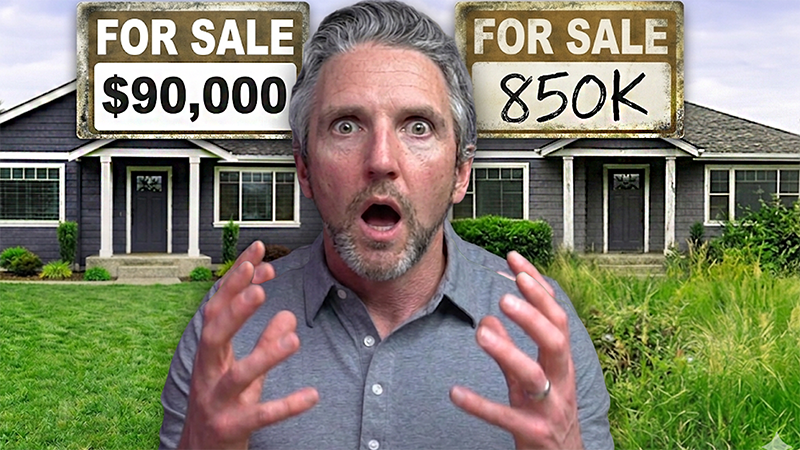
Is the Starter Home Dead? Yeah… Kind Of.
Everyone loves a villain when it comes to housing.
It’s hedge funds.
It’s Airbnb.
It’s “greedy developers.”
Cute. Wrong, but cute.
The real reason housing feels impossible in Washington? We’re missing over 250,000 homes, and that gap didn’t happen overnight.
This is decades of policy quietly choking supply while demand kept showing up like an uninvited guest that refuses to leave.
The Problem Nobody Wants to Admit
Back in the ’90s, Washington decided to “control growth.” On paper, that sounds responsible. In reality, it meant drawing lines on a map and saying, “Everyone fit inside this box.”
Spoiler: they never really expanded the box.
So now we’ve got a growing population, limited buildable land by design, and prices doing what prices do when supply gets strangled - skyrocketing.
And here’s the part that should make you pause: only about 4% of Washington’s land is actually used for housing.
So no, this isn’t a land shortage. It’s a decision-making problem.
Why That “Starter Home” Costs $700K
When someone looks at a small fixer and says, “How is this $700K?”, they’re assuming that’s the market talking.
It’s not.
A huge chunk of that price is basically a hidden tax. Permits, delays, zoning rules, environmental requirements, fees stacked on fees, it all adds up to roughly 30%+ of the home’s cost before you even step inside.
So congratulations, you’re not just buying a house.
You’re also funding bureaucracy.
The Myths That Need to Retire Immediately
Let’s clean this up quickly, because some of these takes need to be put down respectfully.
The whole “Wall Street is buying everything” narrative? They own less than 3% of housing.
Foreign buyers? A small slice.
Airbnb? Already cooling off.
Developers being the big bad wolf? Please. Most are aiming for modest margins while navigating a system that makes building anything feel like running an obstacle course blindfolded.
The truth is a lot less exciting, which is probably why people avoid it:
We just didn’t build enough homes.
That’s it. That’s the scandal.
So… Is Anything Actually Getting Better?
Shockingly, yes. Slowly. Painfully. But yes.
Washington has started loosening things up, allowing duplexes, backyard homes (ADUs), and eventually making it easier to split lots without spending a small fortune just on paperwork.
These changes aren’t revolutionary. They’re more like the state finally admitting, “Okay fine, maybe we overdid it.”
But here’s the catch: implementation is messy. Cities are still finding creative ways to pile on fees and requirements that quietly kill projects before they even start.
So progress? Yes.
Fast enough? Not even close.
Why You’re Starting to See Weird Housing Trends
If you’ve noticed smaller homes popping up, backyard units being built, or people squeezing into neighborhoods they previously couldn’t afford - there’s a reason.
When supply is tight, people adapt.
Builders are pivoting toward smaller footprints because that’s what can still pencil out. Investors are chasing niche opportunities like ADUs because they actually cash flow. And buyers? They’re getting creative… or desperate, depending on how you want to frame it.
That “starter home” didn’t disappear.
It just got repackaged into something smaller, denser, and often attached to something else.
The Part People Don’t Want to Hear
There’s no dramatic crash coming to save everyone.
What we’re seeing instead is a slow, awkward reset. Prices might flatten. Growth might cool. But without a serious surge in supply, affordability doesn’t magically fix itself.
And honestly? The solution isn’t complicated. It’s just politically uncomfortable.
You build more homes.
You remove barriers.
You let the market breathe a little.
That’s it.
Final Reality Check
Washington didn’t stumble into this housing crisis. It engineered it—slowly, over decades, with policies that made sense individually but disastrous collectively.
Now the state is trying to course-correct, like a massive ship doing a three-point turn.
It’ll get there eventually.
But it’s going to take time.
In the meantime, the real opportunity isn’t waiting for prices to crash. It’s understanding where the system is loosening—and getting there before everyone else catches on.

Anton Stetner
| Anton Stetner & RESG | Keller Williams North Sound
or another way