.png)
Categories
FED, Federal Reserve, Inflation, Interest Rates, Jobs, Mortgage, Mortgage rates, Property taxes, Wealth Building, Wealth Building through Real Estate, TaxesPublished January 10, 2026
The FED’s Pivot Is Here: How the Federal Reserve’s Pivot Could Reshape the Entire Economy

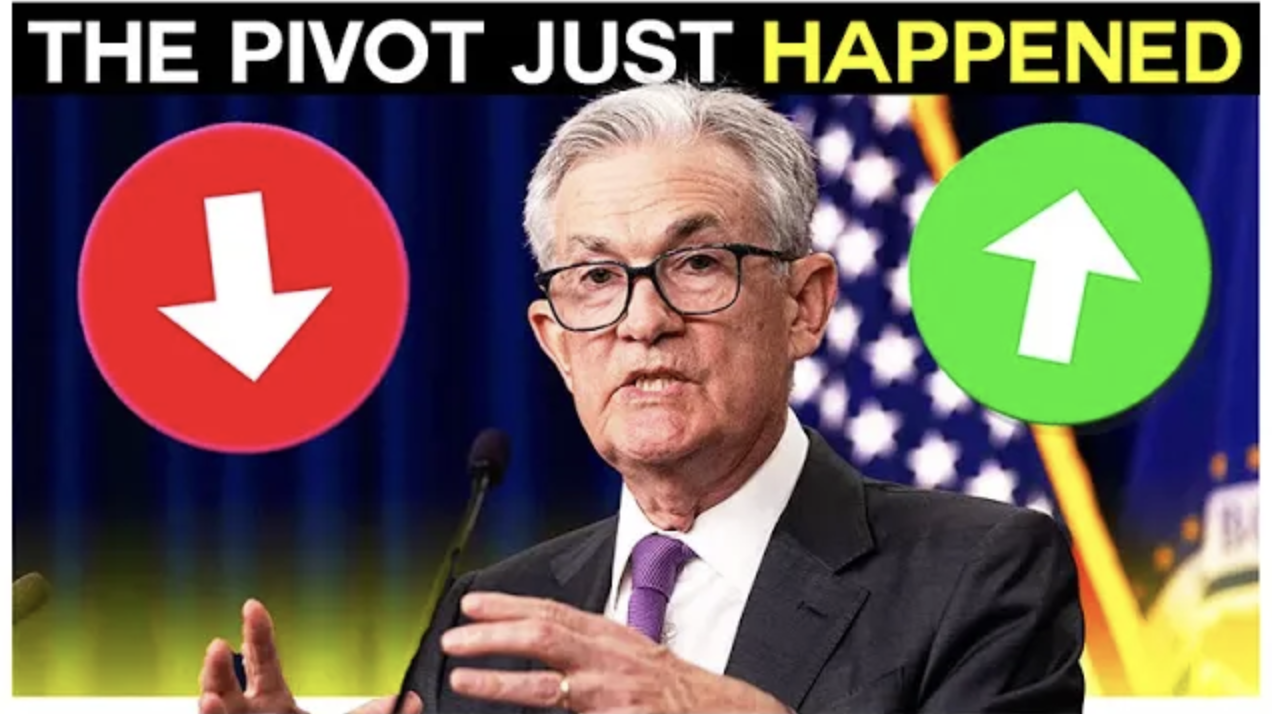
The Fed’s Doing a Quiet Pivot, and It’s Bigger Than People Think
Everyone’s talking about high interest rates like the Fed is still in full-on inflation-fighting mode. Meanwhile, the Fed is already quietly executing a pivot that will probably go down as one of the biggest monetary reversals in modern history.
Years from now, economists are going to look back at this moment and say: they claimed they were fighting inflation, but what they were really doing was surrendering to the U.S. economy’s dependence on cheap money.
Because that’s the actual story here.
We are not just used to cheap money. We are addicted to it.
The “Cheap Money Addiction” Nobody Wants to Admit
Let’s call it what it is: the U.S. has a cheap debt habit.
And when you look at the numbers, it makes sense why the Fed can’t stay restrictive forever without breaking something.
The country is carrying so much debt that the system is structurally built around the assumption that borrowing stays affordable.
That’s why the Fed isn’t just “adjusting policy.” They’re trying to manage a situation where:
- the government needs to keep issuing debt
- interest costs are ballooning
- the economy is dependent on easy liquidity
- and the Fed’s “inflation mandate” starts getting trumped by financial reality
This isn’t theory. It’s math.
The Stealth Pivot Already Started
Earlier this year, the Fed quietly slashed quantitative tightening from $60 billion per month down to $25 billion.
That right there should have been the flashing neon sign that the Fed was shifting gears.
Because when you reduce tightening that aggressively, you’re basically telling the market:
“We’re not tightening the way we used to.”
And if you’re paying attention, you already know what comes next.
Jerome Powell eventually shows up and says something that sounds controlled and responsible, like:
- “We got our 25 basis point cut.”
- “We’re stopping QT.”
- or “Here’s the path to stopping QT.”
But the effect is the same.
This is a form of stealth easing, and it matters because the Fed doesn’t need to scream “QE” for liquidity to start flowing again.
What Quantitative Easing Actually Is (And Why People Call It Printing Money)
Here’s the clean definition:
Quantitative easing (QE)
QE is when the Fed adds liquidity to the financial system, mainly by buying assets.
That liquidity flows through the banking sector and into the broader economy.
The general public calls it “money printing” because it increases the amount of money floating around, lowers rates, and makes borrowing easier.
Quantitative tightening (QT)
QT is the reverse. It’s when the Fed removes liquidity, usually by letting assets roll off their balance sheet or selling them.
QT is like pulling oxygen out of the room. It slows the system down by making money less available and less cheap.
How the Fed Uses Its Balance Sheet to Control the Game
This is where most people lose the plot, so let’s make it simple.
During the COVID era, the Fed got rates down to those ridiculous 3% levels by buying:
- Treasury bonds
- mortgage-backed securities
By doing that, the Fed became one of the biggest buyers in the market. That drove yields down and pushed borrowing costs lower across the economy.
But now those assets have been rolling off the Fed’s balance sheet. That was QT.
And the Fed already told us the plan:
- In May, they said they were slowing down QT
- and now they’re signaling they may stop it entirely
That shift moves them toward a more neutral, accommodative stance.
And that is the pivot people are pretending hasn’t happened yet.
Why They’re Doing This: The Debt Costs Are Eating the Budget Alive
This is the part that makes the “cheap money addiction” unavoidable.
A massive chunk of government spending is now tied up in servicing the debt. The transcript calls it:
19% of spending goes to debt payments.
That means about one in every five dollars is going toward the cost of the debt.
Now stack that next to the flow of money:
- around $5 trillion in tax revenue
- around $7 trillion in spending
- around $350 billion in tariffs
- and still… a deficit
So what happens when debt payments rise and deficits expand?
The government has to issue more debt.
And the higher rates go, the more expensive that cycle becomes.
So the Fed is boxed in.
Because if they keep rates too high for too long, the debt servicing costs spiral and the whole system gets stress fractures.
That’s why the Fed is structurally pressured to ease.
Not because they want to.
Because they have to.
The Big Lie: “We’re Fighting Inflation”
Yes, inflation got too hot. Yes, the Fed needed to tighten.
But what you’re watching now is the Fed slowly pulling back from that tightening because the system can’t tolerate it indefinitely.
They can say “inflation” as the headline.
But the real driver underneath is:
cheap financing is required to keep the machine running.
And that’s why the Fed is pivoting.
Where We Are Now: From Tightening to Neutral
So if you want the simplified summary:
- inflation spikes → Fed tightens aggressively
- tightening causes stress → Fed slows QT
- slowing QT becomes neutral
- neutral becomes stealth easing
- stealth easing becomes the next liquidity cycle
That’s why this moment is bigger than people think.
Because the Fed is moving from “we’re crushing inflation” to “we’re managing reality.”
And reality is:
the U.S. economy is addicted to cheap money.
Anton Stetner
| Anton Stetner & RESG | Keller Williams North Sound
or another way