.png)
Categories
Washington State, Washington State Real Estate, Wealth Building, Wealth Building through Real Estate, Real Estate Fees, Real Estate Market Trends, Real Estate Tips, Renting Tips, Interest Rates, Housing crisis, Homebuyer Tips, Recession, Homes for Sale, Home PricesPublished December 23, 2025
Washington at Stall Speed: Is a Silent Recession Creating the Best Buying Window of 2025?

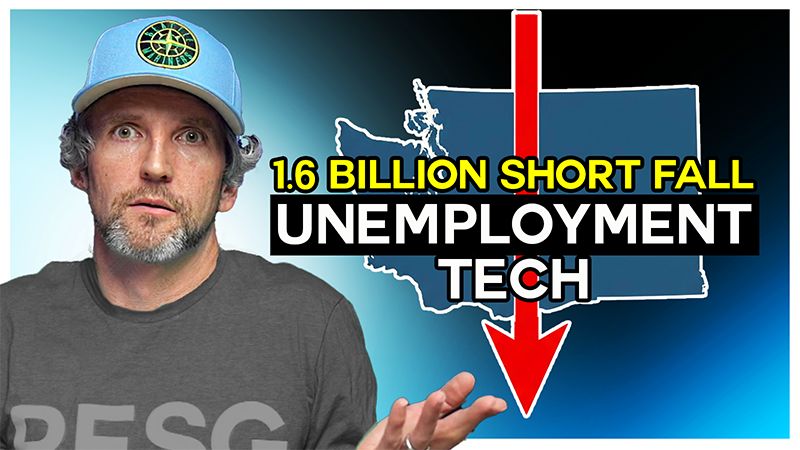
Is Washington State Sliding Into a Recession?
A lot of people are asking the same question right now. Is Washington State sliding into a recession, yes or no?
The honest answer is that we may not be fully there yet, but we are reaching stall speed. Officials keep talking about a soft landing, but the day to day reality for many households and businesses feels different. Costs are high, housing is still unaffordable, layoffs are happening, and it is harder to find a good job. Even if the state is technically growing on paper, the underlying indicators suggest Washington is functionally stagnating.
This is not meant to be doom and gloom. This is about awareness. If you understand what is happening beneath the headlines, you can avoid getting blindsided and you can position yourself for opportunity.
The Budget Shock Washington State Cannot Ignore
The clearest red flag right now is the budget situation.
Washington State is facing a $1.6 billion shortfall in the current two year budget window. This is not a minor forecasting miss. It is a signal that taxable activity is drying up faster than expected.
What makes this even more important is the context. Washington recently raised about $9.4 billion in new taxes and still the forecast is coming in short. That tells you something real. Consumers and businesses are spending less, hiring less, and earning less than the state assumed.
If the economy slows further, the shortfall grows. The concern is not only the number. The concern is how policy makers respond. If the response is to raise taxes again instead of reducing spending, that can create a negative cycle that makes the slowdown worse.
GDP Growth Can Be Positive While the Economy Still Feels Bad
Washington is projected to grow around 2.2% in 2025 and about 2.0% in 2026. Technically, that is expansion.
But the problem is that the underlying indicators show pre recession fragility. If the economy is expanding but households feel squeezed, businesses are cautious, and revenues are falling, that is not healthy momentum. That is what people refer to as a growth recession.
Also, Washington normally outperforms the national economy. If Washington is coming in below broader national growth projections, that is another signal that something is changing locally.
The Labor Market Looks Stable Until You Look at Underemployment
Headline unemployment is one metric, but it does not tell the whole story.
Washington’s unemployment rate is around 4.5%, slightly above the national level. Underemployment, measured by U6, is higher. U6 includes people working part time who want full time work and people who are discouraged from seeking jobs. Washington’s U6 is around 8.7%, which is above the national number.
That gap matters because it reflects hidden slack in the economy. It also matches what many people see in real life. Fewer hiring signs. More caution from employers. More people stuck in roles that do not match their skills or income needs.
What Downtown Seattle Says About the Real Economy
Some of the most visible evidence of slowdown shows up in downtown activity.
Commercial vacancies and reduced foot traffic create downstream effects. If fewer workers are downtown, the restaurants, retail, and services that depended on them struggle. When that spending slows, city revenues slow. This is one reason Seattle faces its own budget pressure.
This is not just about one building or one block. When downtown activity declines, it impacts a wider set of businesses and employment across the region.
Construction Is Weakening, and That Has Consequences
Construction is an important leading indicator because it is tied to future investment.
When construction demand slows, contractors start looking for work, equipment starts getting sold off, and the pipeline of future projects shrinks. That affects both commercial and residential building.
There is also a key second order effect. If construction slows while housing supply is already behind, it becomes even harder to build enough homes. That keeps affordability tight and reinforces the long term supply problem across the Seattle metro.
The Two Major Risks to Watch
There are two risks that could push Washington from stall speed into a more serious downturn.
First is a double dip in tech. If another major round of layoffs hits high income workers, that can pressure commercial real estate, reduce consumption, and lower tax receipts. That creates a feedback loop that hits budgets and services.
Second is policy overcorrection. If lawmakers respond to budget shortfalls by raising taxes again, that can accelerate capital flight, reduce business activity, and encourage more residents to leave. That is how a policy induced recession can happen.
The Counterbalance: AI and Sector Shifts
Not everything is negative.
Seattle remains strong in AI and new startups. Investment and hiring in AI related work is meaningful and it suggests a sector transition is underway. The challenge is that it may not replace the scale of job losses elsewhere quickly enough, especially if other tech roles are displaced.
This is one reason the economy can feel uneven. Some areas grow while others contract.
What This Means for Real Estate in Washington
Real estate does not move in lockstep with the economy.
Since rates rose sharply in 2022, real estate has been in a transaction recession. Sales volume dropped, activity slowed, and affordability became the main constraint. That created mispricing in certain pockets, not a broad collapse.
If the Federal Reserve cuts rates and the 10 year treasury trend continues downward, affordability improves. Even small improvements in affordability can bring buyers back in a supply constrained market like Seattle.
That is why 2025 can feel slow while 2026 may look stronger. If rates ease, demand tends to return. In a market with limited supply, prices can start rising again once buyers reenter.
Why Rentals and Middle Housing Can Perform Well
When affordability is strained, more households rent longer. When uncertainty rises, many buyers wait. That pushes demand toward rentals.
In prior downturns, rents often did not collapse the way people assume. Households adjust by doubling up, renting rooms, or staying in rentals rather than buying.
That is why strategies like these can matter in this cycle:
- Buying rentals that cash flow
- ADU and DADU opportunities
- Middle housing, especially 2 to 6 units
- Workforce housing and rent by the room setups
- Buying properties priced below replacement cost when motivated sellers exist
The Practical Takeaway
Washington is not necessarily in a full recession today, but the state is clearly near stall speed. Budget shortfalls, slowing employment, underemployment, and weakness in construction are not noise. They are signals.
At the same time, interest rates appear likely to trend lower into 2026. If that happens, real estate activity can recover even if parts of the economy remain sluggish.
The best strategy in a market like this is to stay disciplined, track the real indicators, and look for mispricing and motivated sellers while the window is still open.

Anton Stetner
| Anton Stetner & RESG | Keller Williams North Sound
or another way