.png)
Categories
FED, Federal Reserve, Property taxes, Real Estate Fees, Real Estate Market Trends, Real Estate Tips, Real EstatePublished May 8, 2026
Why the Fed Is Stuck And What It Means for Real Estate

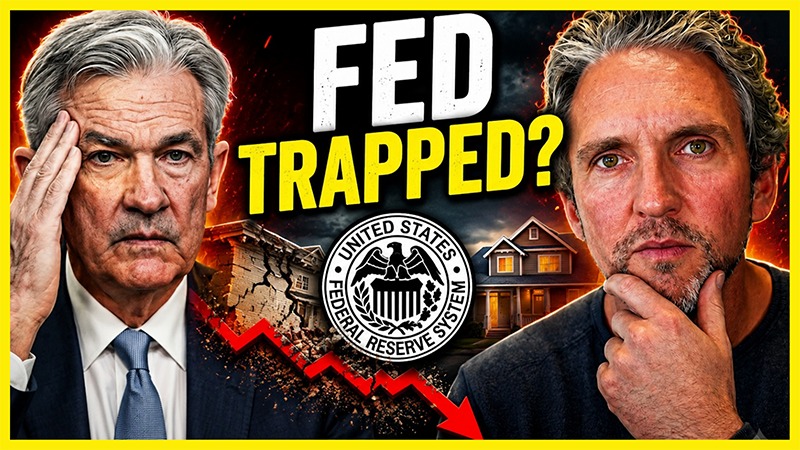
The Fed Might Be Trapped Again
The Federal Reserve is sitting in one of the most uncomfortable positions it has faced in years.
Inflation is heating back up. Oil prices are climbing. The tariff lag effect is finally showing up in economic data. And now the Fed has a serious problem: if they cut rates too early, inflation could spiral again. But if they keep rates high for too long, they risk breaking the economy.
Welcome to the new balancing act.
At the latest Federal Reserve meeting, Jerome Powell made it very clear that the Fed is nowhere near comfortable declaring victory over inflation. In fact, the opposite happened. The Fed’s favorite inflation metric, Personal Consumption Expenditures or PCE, came in hotter than expected.
That matters because PCE is the inflation signal the Fed watches most closely.
And this wasn’t some tiny miss that economists could shrug off. Inflation jumped sharply higher, marking one of the biggest upward moves since the aggressive rate hikes that started back in 2022.
That’s not exactly what you want to see if you’re hoping for mortgage rates to collapse anytime soon.
The problem is that inflation is now getting hit from multiple directions at once.
First, there’s energy. Rising oil prices flow through the economy like a slow-moving tax increase. Transportation costs rise. Manufacturing costs rise. Food prices rise. Shipping rises. Consumers feel squeezed everywhere.
Second, there’s the tariff effect finally kicking in. Businesses can only absorb higher costs for so long before they pass them directly to consumers. That lag effect is now starting to show up in inflation data.
And the really uncomfortable part? We still haven’t seen the full impact yet.
That’s why markets reacted so aggressively after the Fed meeting. The CME FedWatch Tool, which traders use to predict future rate cuts, is now pricing in the possibility that there may not be any cuts at all this year. Some projections are even pushing meaningful cuts into next year.
That is a massive shift from the “rate cuts are coming soon” narrative people were celebrating earlier.
Then things got even more interesting inside the Fed itself.
Normally, Federal Reserve meetings are boringly unified. Policymakers disagree behind closed doors, then present a fairly coordinated message publicly.
Not this time.
Four governors dissented during the meeting, something that reportedly hasn’t happened at this scale in over three decades.
And here’s what made it strange: the disagreement wasn’t just between the usual doves who want lower rates and hawks who want higher rates. Some of the Fed’s more hawkish members reportedly objected because they believed the Fed’s policy language still sounded too soft on inflation.
Translation: some officials think the Fed is still not taking inflation seriously enough.
That tells you how nervous parts of the Federal Reserve are becoming.
Now layer politics on top of all this.
Jerome Powell publicly stated he is not stepping down from his role early, despite growing pressure and criticism from political figures who want lower interest rates sooner. That immediately created another wave of tension because the Fed’s independence has become part economic issue, part political battlefield.
And honestly, this is where things start getting messy.
The Federal Reserve is supposed to operate independently from political pressure. But in reality, everyone knows lower interest rates help stimulate the economy, support housing, and make consumers feel wealthier heading into elections.
The pressure to cut rates is very real.
But the inflation data is making that harder and harder to justify.
What’s also fascinating is how much attention is now shifting toward future Fed leadership and what comes next after Powell. Some potential future candidates are already signaling very different approaches to inflation and monetary policy.
There’s growing discussion around whether artificial intelligence could become disinflationary long term by increasing productivity and reducing labor costs. Others are talking about using more “trimmed” inflation measurements that filter out extreme price swings.
That sounds technical, but it matters because changing how inflation is measured can completely change how aggressive the Fed appears.
And underneath all of this sits the real question nobody can answer yet:
Is this inflation spike temporary or structural?
That distinction changes everything.
If oil prices calm down quickly and supply chains stabilize, inflation could cool again naturally. But if energy stays elevated for months and tariffs continue feeding into prices, inflation may become embedded across the broader economy.
That’s when the Fed gets trapped.
Because once inflation becomes structural, cutting rates becomes dangerous. But keeping rates elevated too long creates risks of its own, especially for housing, construction, business investment, and consumers already stretched thin.
This is why mortgage rates remain stubbornly high even when people keep expecting them to fall.
The bond market no longer fully trusts that inflation is dead.
And until that changes, the Fed’s job only gets harder.

Anton Stetner
| Anton Stetner & RESG | Keller Williams North Sound
or another way